
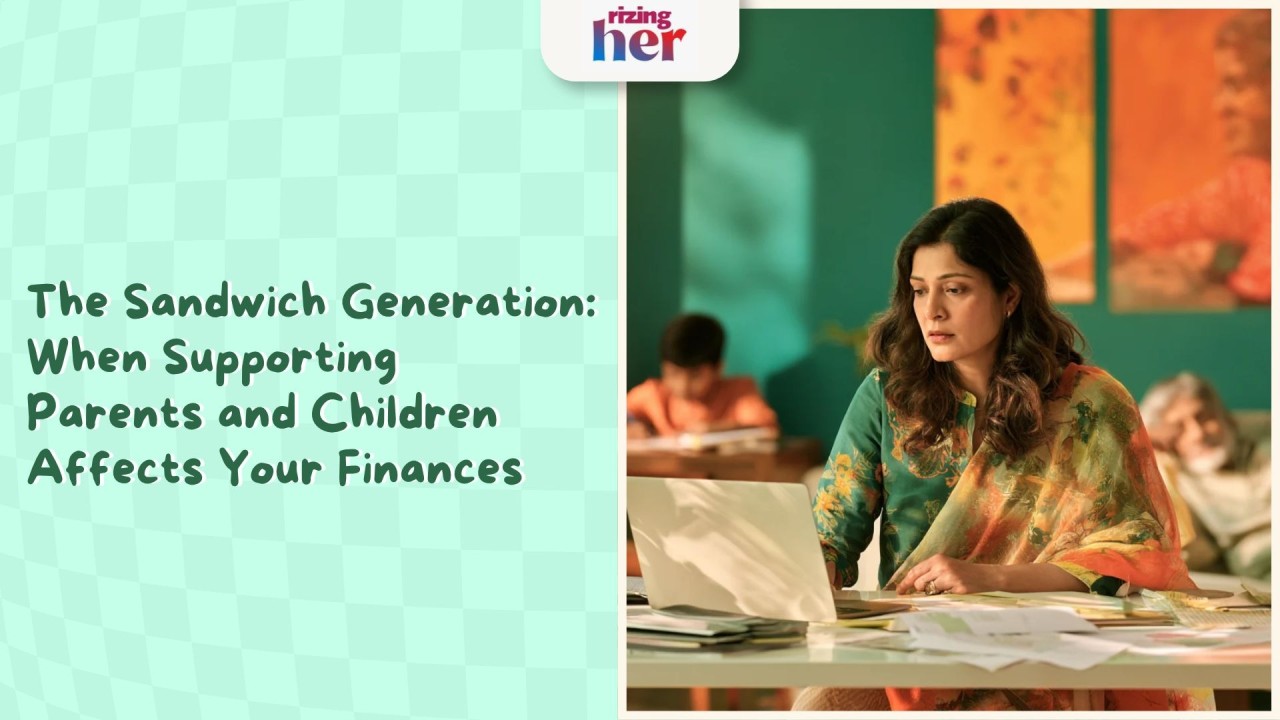
The Sandwich Generation: When Supporting Parents and Children Affects Your Finances
 By sonali.kohli
26 Nov 2026
3 min read
There is a stage in life when a woman’s income begins to feel like it belongs to everyone but her. School fees, household expenses, medical bills for ageing parents, family emergencies and everyday responsibilities compete for the same monthly salary. She may be earning well and progressing in her career, yet find that very little is left for her own savings, investments or long-term security.
This is the financial reality of the sandwich generation: people caught between the needs of ageing parents and growing children. And for many women, the burden can be particularly complicated because financial support often comes with expectations around caregiving, responsibility and being the person who holds the family together.
The expenses rarely arrive one at a time. A child’s education may coincide with a parent’s medical treatment. A home loan may run alongside the cost of supporting a sibling or helping parents manage retirement. Even when other family members contribute, women can find themselves coordinating payments, managing emergencies and making financial adjustments whenever something unexpected happens.
The challenge is that these responsibilities are often treated as natural extensions of a woman’s role rather than significant financial commitments. Supporting parents is seen as a duty. Providing children with opportunities is considered a priority. But the financial consequences for the woman making these contributions can remain largely invisible.
Over time, this can create a difficult trade-off. Money that could have gone towards retirement investments, an emergency fund or personal wealth creation is redirected towards immediate family needs. Some women postpone buying a home, delay investing or reduce their own financial goals because someone else’s requirement feels more urgent.
The consequences may not be immediately apparent. A woman in her thirties or forties may feel that she has enough time to rebuild her savings later. But years of interrupted investing and limited retirement contributions can affect the financial choices available to her in the future. The very person supporting two generations may find herself with insufficient resources when she eventually needs support herself.
There is also an emotional dimension to this financial pressure. Setting limits on family support can create guilt, particularly when parents are ageing or children need opportunities. Women may find it difficult to distinguish between what they can afford to contribute and what they feel obligated to provide.
Addressing this challenge does not mean withdrawing support from family. It means recognising that caregiving has a financial cost and that those costs need to be planned for. Open conversations about shared responsibilities, realistic family budgets and contributions from other members can make a difference. Equally important is treating personal savings, insurance and retirement investments as essential commitments rather than whatever remains after everyone else’s needs are met.
Financial independence is not simply about earning an income. It is also about having enough resources to make choices, manage uncertainty and look after oneself over the long term.
Women should not have to choose between supporting the people they love and securing their own future. The two responsibilities deserve a place in the same financial plan.
Because a woman who spends her life being everyone else’s safety net should not have to discover that she has no safety net of her own.