
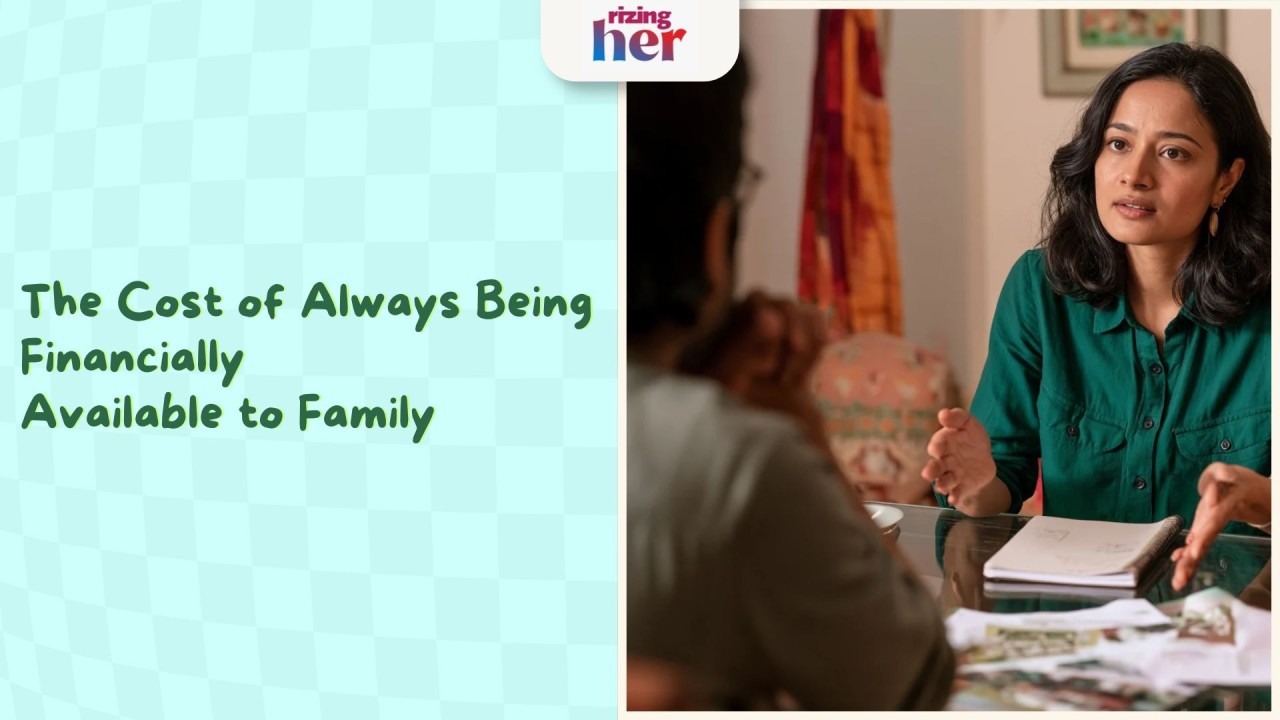
The Cost of Always Being Financially Available to Family
 By sonali.kohli
26 Nov 2026
3 min read
For many women, financial responsibility does not end with managing their own expenses. It extends to parents who need medical support, siblings navigating difficult circumstances, relatives facing emergencies and family members who turn to them when money is short. What often begins as occasional help can gradually become a regular financial commitment.
The difficulty is that these contributions rarely appear as formal obligations. There may be no loan agreement, repayment schedule or fixed monthly amount. Instead, money is transferred when someone needs it, bills are paid when a situation arises and personal savings are dipped into whenever the family requires support. Over time, being financially available to everyone can come at a cost to one’s own financial future.
For women who are earning independently, this responsibility can be particularly complicated. Their income may represent personal financial freedom, but it can also become a safety net for the wider family. A portion goes towards household expenses, another towards parents’ healthcare, and sometimes more towards a sibling’s education, business or unexpected financial difficulties.
None of these responsibilities is necessarily unreasonable. Supporting family members can be an important expression of care and solidarity. The problem emerges when this support becomes so routine that there is little left for personal financial planning.
The first casualty is often savings. Money that could have gone into an emergency fund, a fixed deposit or a long-term investment is redirected towards immediate family needs. Even when the amounts seem manageable individually, repeated contributions can reduce the money available for wealth creation.
Investments can also take a back seat. Women may postpone starting a mutual fund SIP, delay retirement planning or avoid making larger financial commitments because they want to remain prepared for the next family emergency. The opportunity cost is not always immediately visible, but years of delayed investing can affect long-term financial security.
There is also an emotional dimension to this pattern. Saying no to a parent, sibling or relative can create guilt, particularly when women are expected to be dependable and accommodating. Some may feel that setting financial boundaries is equivalent to withdrawing emotional support. Others may find themselves becoming the default person to approach whenever a financial problem arises.
But being financially responsible towards family should not mean becoming financially vulnerable yourself.
One important step is to recognise the difference between planned support and open-ended financial responsibility. Setting aside a specific amount for family assistance, discussing shared responsibilities with siblings and distinguishing genuine emergencies from recurring expenses can make contributions more manageable.
Equally important is protecting personal savings and retirement investments. These should not automatically become the first source of money whenever someone else faces a financial difficulty.
Financial independence is not simply about earning a salary or having money in a bank account. It is also about retaining enough control over that money to make choices about your own future.
Women should be able to support the people they love without constantly postponing their own security. Because a financially secure woman is not just better prepared for herself; she is also in a stronger position to support her family when it genuinely matters.