
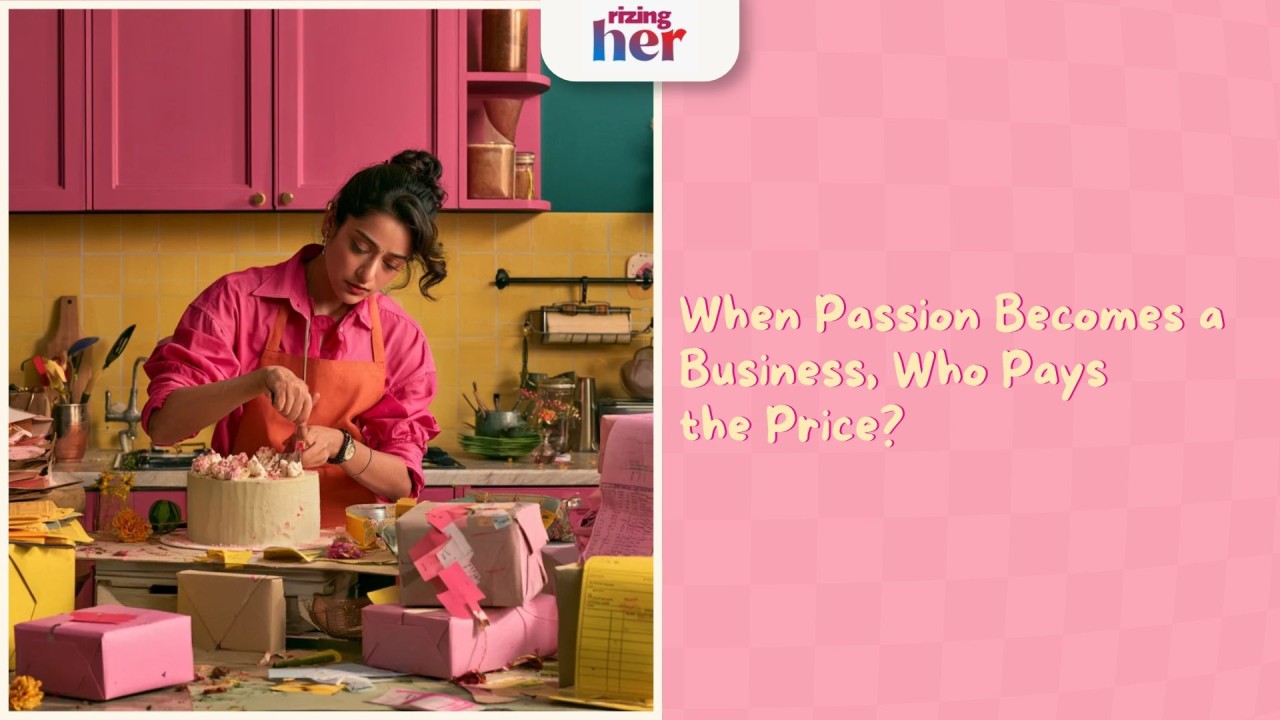
When Passion Becomes a Business, Who Pays the Price?
 By sonali.kohli
26 Nov 2026
3 min read
The idea of turning a passion into a profession is often presented as the ultimate career achievement. A woman who loves baking opens a home bakery. Someone who enjoys photography starts a studio. A person who has spent years painting begins selling commissioned artwork. What begins as something deeply personal gradually becomes a source of income, independence and perhaps even financial security.
But there is a question that rarely accompanies these success stories: what happens when the thing you love becomes the thing you have to do?
The transition from passion to business changes the relationship a person has with their craft. A hobby allows room for experimentation, mistakes and occasional disinterest. A business does not offer the same freedom. There are customers to satisfy, deadlines to meet, bills to pay and expectations to manage. The creative impulse that once came naturally now has to operate within commercial boundaries.
For many women entrepreneurs, this shift can be particularly complicated because the business often begins with a skill they have developed outside formal professional structures. Cooking, designing, writing, crafting, teaching or creating content may initially be expressions of personal interest. Once monetised, however, these activities require an entirely different set of capabilities: pricing, marketing, negotiation, customer acquisition and financial planning.
The work also expands beyond the craft itself. A home baker may spend more time responding to customer messages, sourcing ingredients, managing deliveries and calculating margins than actually baking. An independent designer may find herself negotiating payments and chasing approvals instead of creating. The business grows, but the time available for the original passion steadily shrinks.
There is also the pressure to remain commercially relevant. Social media has made visibility an important part of running many small creative businesses. Entrepreneurs are expected to post regularly, follow trends, produce fresh content and maintain an engaging online presence. The pressure to keep selling can turn even the most enjoyable activity into a continuous production cycle.
Then comes the difficult question of pricing. When the product is closely tied to personal identity, charging for it can feel uncomfortable. Women may underprice their work because they fear losing customers, struggle to account for their time or mistake personal satisfaction for adequate compensation. Eventually, a business that appears successful from the outside can become financially and emotionally exhausting.
None of this means that passion and profit cannot coexist. But building a business around something one loves requires recognising that the two operate by different rules. Enjoying the work does not make labour free. Creative fulfilment cannot substitute for sustainable margins, and customer appreciation cannot pay operating expenses.
Perhaps the real measure of success is not whether a woman manages to monetise everything she loves. It is whether she can build a business that allows her to continue loving what she does.
Passion can be the reason a business begins. It should not become the resource a business consumes without limits.