
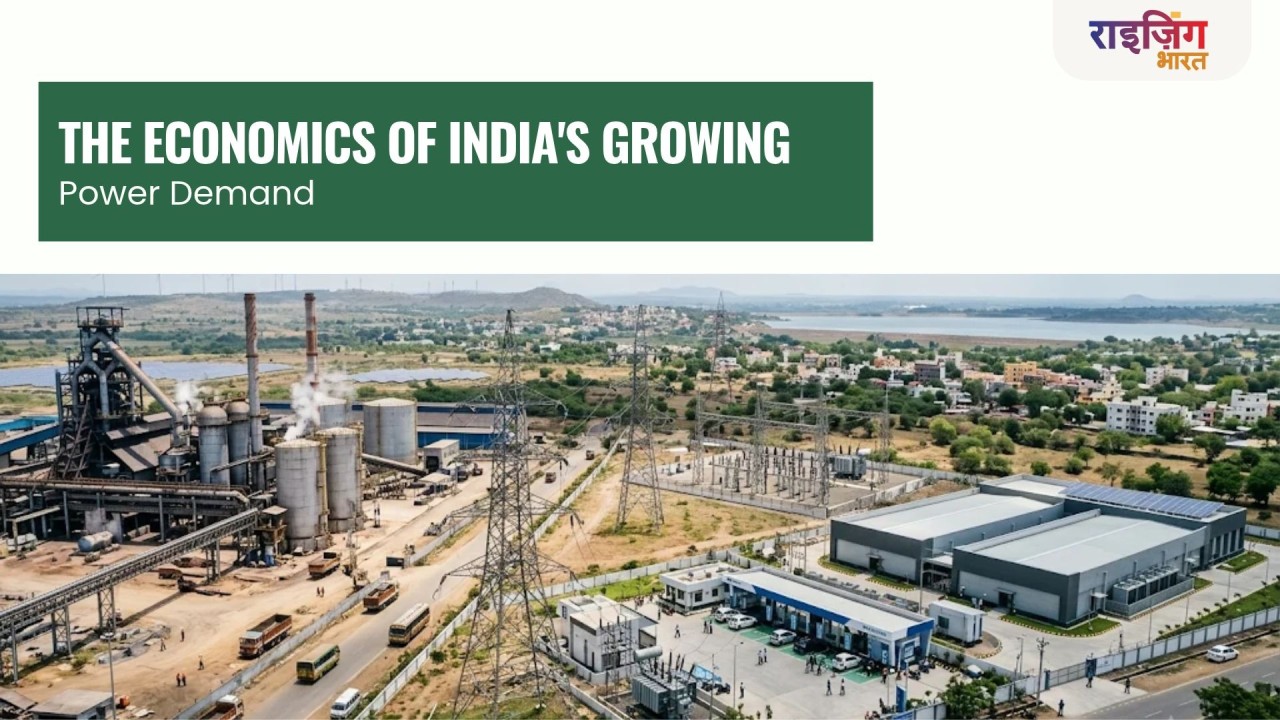
The Economics of India’s Growing Power Demand
 By sonali.kohli
26 Nov 2026
3 min read
India’s next phase of economic expansion will require more than factories, highways and digital infrastructure. It will need electricity and increasingly large quantities of it. As manufacturing expands, electric mobility gains momentum and data centres multiply, power demand is becoming a central economic question. The challenge is no longer simply how to generate more electricity, but how to deliver reliable, affordable and cleaner power to an economy that is becoming more energy-intensive.
Manufacturing is one of the biggest drivers of this shift. Electronics, automobiles, chemicals, steel and other industrial sectors depend on uninterrupted electricity to maintain production. As companies invest in new facilities and modernise existing plants, their power requirements are also changing. Automated production lines, advanced machinery and industrial cooling systems can increase both consumption and the need for reliable supply. For manufacturers, electricity is not just an operating expense; it can influence production costs, competitiveness and investment decisions.
Electric mobility adds another dimension. The expansion of electric two-wheelers, passenger vehicles, buses and commercial fleets will gradually increase demand for charging infrastructure. This creates opportunities beyond vehicle manufacturing. Charging stations, battery swapping networks, grid connections, power management systems and energy storage could become important parts of a wider commercial ecosystem. The pace of adoption will depend not only on vehicle affordability but also on the availability of convenient and dependable charging facilities.
Data centres are emerging as another significant source of electricity demand. Cloud computing, digital services and artificial intelligence require large facilities that operate continuously and consume substantial amounts of power. As companies expand their digital infrastructure, access to reliable electricity is becoming an important consideration when choosing where to establish data centres. Cooling requirements add to the challenge, making energy efficiency and water management important parts of the investment equation.
These developments are creating opportunities across the energy value chain. Renewable energy developers can benefit from rising demand for cleaner electricity, particularly as large industrial and technology companies look to manage their energy requirements and sustainability commitments. Battery storage could help address the mismatch between renewable generation and consumption patterns. Transmission infrastructure, distribution networks, smart meters and grid management technologies will also require investment to support a more complex electricity system.
However, rising demand does not automatically translate into a stronger energy ecosystem. Power generation must expand alongside transmission and distribution capacity. Grid reliability, financing requirements, land availability, equipment supply and the cost of energy storage will influence how quickly new capacity can be brought online. Electricity tariffs also matter, particularly for industries competing in global markets.
The opportunity, therefore, extends well beyond building new power plants. It includes modernising the grid, improving energy efficiency, developing storage solutions and creating more flexible systems that can balance demand across different users and regions.
India’s energy transition is often discussed through the lens of climate commitments and renewable capacity. But it is equally a story about economic competitiveness. The factories producing tomorrow’s goods, the vehicles moving people and products, and the data centres powering digital services will all depend on the strength of the country’s electricity infrastructure.
The next investment opportunity may not lie in power generation alone, but in building the entire ecosystem required to keep a growing economy running.