
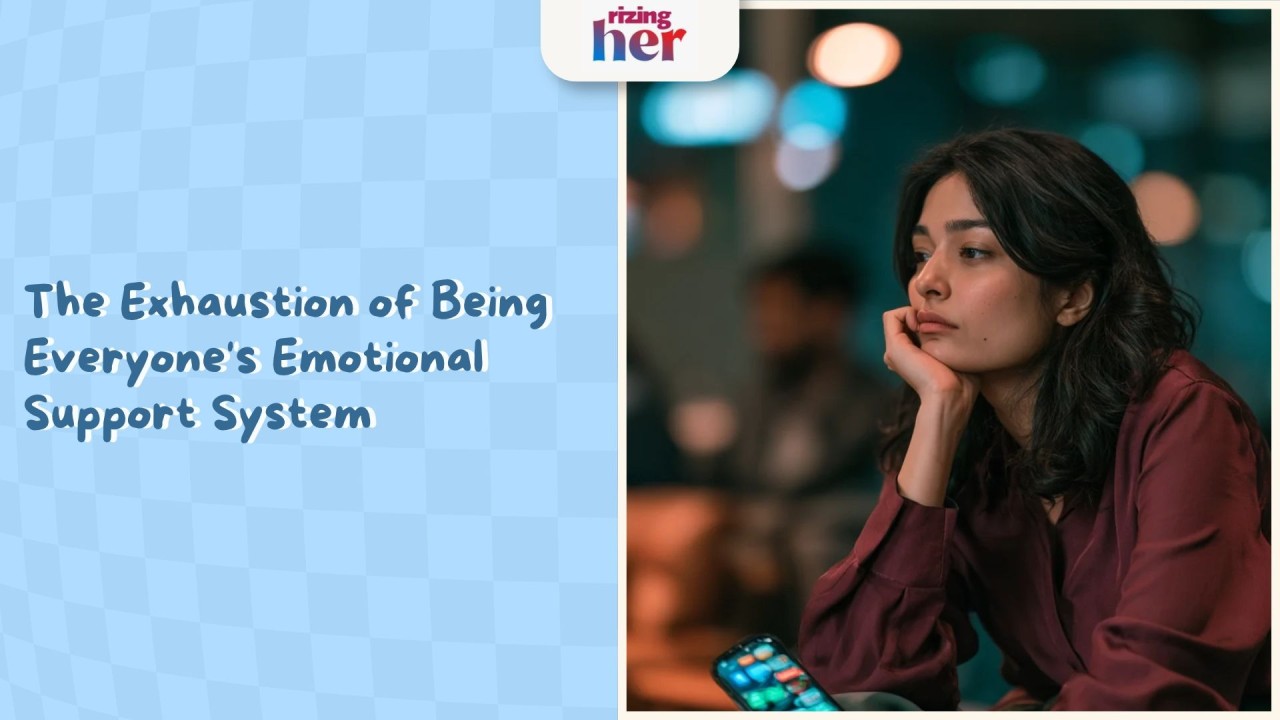
The Exhaustion of Being Everyone’s Emotional Support System
 By sonali.kohli
26 Nov 2026
3 min read
There is often one person in every family or social circle who everyone turns to when something goes wrong. She is the friend who listens to relationship problems, the daughter who calms anxious parents, the partner who remembers everyone’s worries and the colleague who makes time for someone else’s difficult day. She knows when something is wrong, remembers what people are going through and often finds the right words when others cannot.
But who does she turn to when she needs someone to listen?
For many women, becoming everyone’s emotional support system happens gradually. It begins with being considered caring, understanding and dependable. Over time, however, these qualities can turn into expectations. She is expected to be patient during disagreements, available during crises and emotionally present even when she has little energy left for herself.
This invisible responsibility is often described as emotional labour. It involves recognising other people’s feelings, anticipating their needs, managing difficult conversations and helping maintain emotional stability in relationships. Unlike many other responsibilities, it rarely has a clear beginning or end. Even when the working day is over, the mental process of worrying about someone, checking in or resolving an issue can continue.
The exhaustion comes not simply from listening to others, but from having very little room to experience one’s own emotions.
Women who are used to being the dependable person may find it difficult to admit that they are overwhelmed. They might minimise their problems because someone else appears to be going through something worse. They may avoid sharing their worries because they do not want to burden people who already depend on them. Sometimes, they become so accustomed to understanding everyone else that they struggle to recognise what they themselves need.
There is also an imbalance that can develop in relationships. When one person consistently provides emotional support, others may begin to assume that she is always capable of giving it. Her silence can be mistaken for contentment, and her ability to manage difficult situations can make her own struggles less visible.
Over time, this can leave women feeling emotionally depleted, disconnected or even lonely despite being surrounded by people. Having many people who confide in you is not necessarily the same as having people with whom you can be vulnerable.
Recognising this exhaustion begins with acknowledging that emotional availability has limits. Being a caring friend, daughter, partner or colleague does not mean being responsible for everyone’s feelings. It is reasonable to say that you do not have the capacity for a difficult conversation, to ask someone else to step in or to express that you need support yourself.
Equally important is building relationships where care moves in both directions. Women deserve spaces where they can speak without immediately being expected to offer solutions, where their feelings are taken seriously and where they do not have to appear composed all the time.
Being understanding is a valuable quality. But it should not become an obligation to absorb everyone else’s emotions while setting aside your own.
Perhaps the people who are always there for everyone need to hear something simple, too: you are allowed to have difficult days, ask for help and be taken care of. You do not have to be everyone’s emotional anchor every single day.