
Why Data Is Becoming a Competitive Advantage for Traditional Businesses
 By sonali.kohli
26 Nov 2026
3 min read
For decades, many businesses have relied on experience, relationships and instinct to make decisions. A retailer knew which products would sell during a particular season. A manufacturer understood when demand was likely to rise. A distributor could often identify a reliable customer without looking at a spreadsheet. That knowledge still matters. But increasingly, the companies gaining an edge are those that can combine experience with something more measurable: data.
Data is no longer the preserve of technology companies and digital-first startups. It is becoming an important business asset for manufacturers, retailers, logistics operators, banks and even traditional family-run enterprises. The reason is straightforward. In competitive markets, the ability to make better decisions faster can directly influence costs, margins and customer retention.
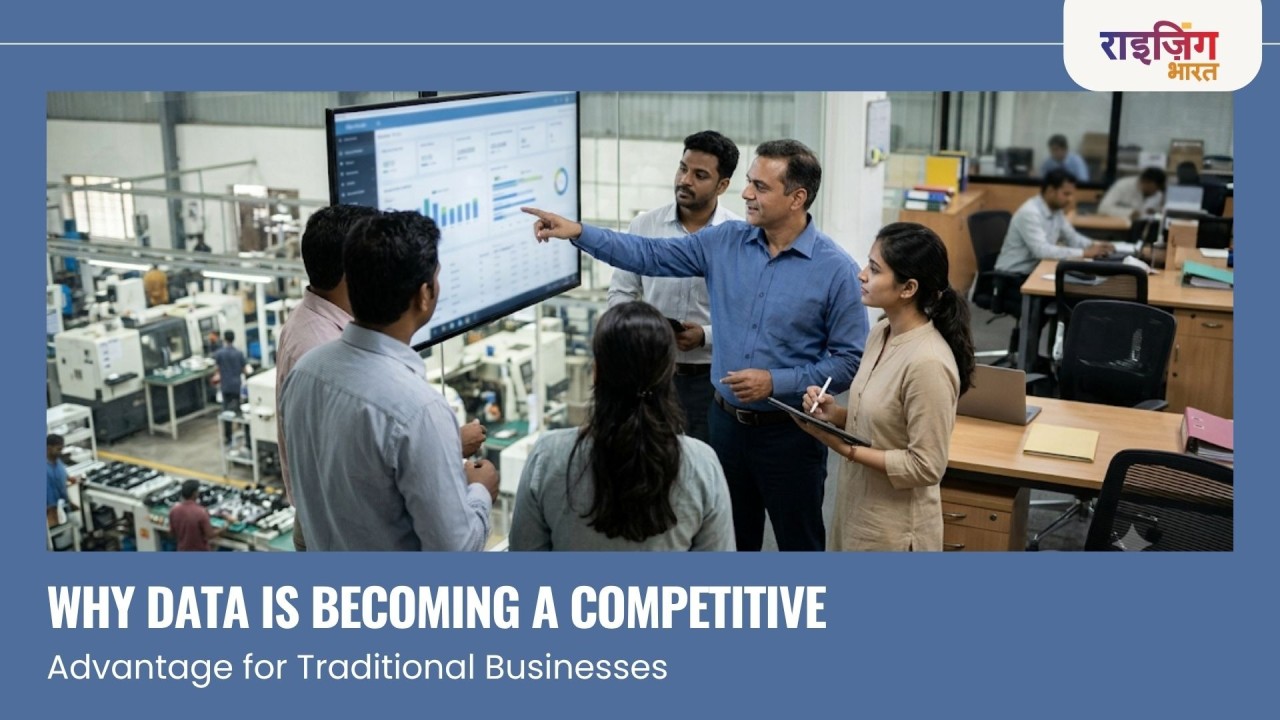
Consider a manufacturing company. Production planning has traditionally depended on sales estimates, historical orders and management judgement. By analysing information from machinery, inventory systems, supplier schedules and customer orders, a company can identify patterns that are difficult to spot manually. It may discover that certain machines frequently cause delays, that particular components are often in short supply or that production slows during specific periods. This information can help businesses reduce downtime, manage inventory and use resources more efficiently.
The same shift is visible in retail. Sales data can reveal which products are performing well, which locations have different buying patterns and when customers are most likely to make purchases. Instead of relying entirely on broad assumptions, retailers can adjust inventory, pricing and promotions based on actual demand. Better forecasting can also reduce the cost of holding excess stock while lowering the risk of losing sales because popular products are unavailable.
For logistics companies, data can improve route planning, vehicle utilisation and delivery schedules. Tracking shipment movement, fuel consumption and delivery times helps operators identify inefficiencies and respond to disruptions. In an industry where small improvements across thousands of journeys can affect overall profitability, operational visibility becomes commercially valuable.
Customer understanding is another important dimension. Traditional businesses often have years of customer relationships but limited systems for analysing them. Bringing together information on purchase history, service requests, payment patterns and feedback can help companies understand what customers value, anticipate changing requirements and identify potential problems before they lead to lost business.
However, collecting data is not the same as using it effectively. Many established businesses have information spread across disconnected software systems, spreadsheets and departments. Data may be incomplete, inconsistent or difficult to access. Without clear ownership and reliable processes, even large volumes of information can produce little practical value.
This is where investment in digital infrastructure, data management and employee capabilities becomes important. Businesses need to identify which decisions they want to improve, what information is required and how teams can use it. Advanced analytics and artificial intelligence may expand these possibilities, but the foundation remains accurate, accessible and well-managed data.
For traditional businesses, the opportunity is not necessarily to become technology companies. It is to become better at understanding their own operations and customers.
Experience can tell a business what has worked in the past. Data can help explain why and indicate what may work next. In markets where efficiency and responsiveness increasingly shape competitiveness, that distinction could become decisive.